Agricultural Pests and Insects: Types, Impacts, and Natural Control Methods
This article explains how agricultural pests and insects affect crop quality and yield. It discusses how technology supports pest management and how climate change is influencing these efforts. Looking ahead, it highlights the importance of focusing on organic methods and digital technologies to ensure sustainable agriculture.
The agricultural sector plays a critical role in feeding the global population and ensuring food security. In 2022, the foreign trade balance of agricultural products reached approximately $6.7 billion, contributing 6.6% to the Gross Domestic Product. Despite its significant role in employment, exports, and national income, many of us remain disconnected from the primary needs and challenges faced by producers.
As agricultural productivity becomes an increasing global concern, a similar picture exists in Türkiye. Intensive chemical use—often a result of industrial farming—negatively affects both crop health and soil fertility. This is not just a seasonal issue but a long-term threat to future generations. One of the areas where chemical use is most dominant is pest control.
What Are the Economic Impacts of Agricultural Pests?
Pests and insects significantly reduce crop yield and quality, directly affecting profitability in agriculture. Lower-quality produce leads to reduced unit prices, while yield losses caused by pests further decrease overall income. Combined with rising input costs, this puts farmers under increasing pressure. In particular, species such as the tomato leafminer (Tuta absoluta), which has developed resistance to pesticides, can cause severe damage if not managed at the right time—potentially destroying an entire season’s worth of effort.
How Can Pests Be Managed Effectively?
Early detection is often more effective than reactive pesticide use. Traditional pest traps are widely used, but monitoring them systematically—especially in large fields—and correctly identifying captured insects is labor-intensive.
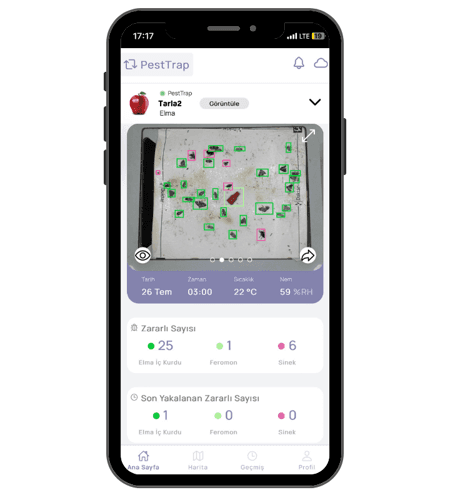
Technology aims to simplify these processes and respond directly to user needs. One of the most effective recent solutions is digital pest monitoring systems like PestTrap. These systems enable accurate and timely pest detection, helping farmers take action at the right moment and choose the most effective control methods.
Most Common and Harmful Pest Types
There are many pest species that threaten agricultural production. Among the most common and damaging are the codling moth, cotton bollworm (green worm), and tomato leafminer. These pests harm plants by feeding on vital tissues, stunting growth and reducing crop quality.
New Technologies in Pest Control
Advancements in agricultural technology are opening new opportunities in pest management. Technologies such as remote sensing, artificial intelligence, and robotics allow for more precise and efficient detection and intervention.
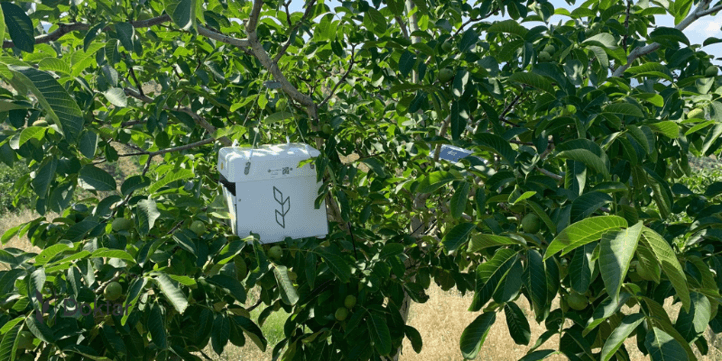
PestTrap, for example, can accurately detect even the smallest insects using AI. With daily images, it enables farmers to monitor pest populations in real time. This allows for early intervention—often reducing the need for multiple pesticide applications to just a single, well-timed treatment.
From Chemical to Organic Control
Historically, chemical pesticides have been the primary method of pest control. However, concerns over environmental damage and resistance have led to growing criticism of this approach.
Today, organic farming and biological control methods are gaining popularity as more sustainable alternatives. Digital tools support this transition by enabling precise measurement and targeted action. In addition to smart traps like PestTrap, digital soil analysis devices allow continuous monitoring of soil nutrients, supporting more efficient fertilization and reducing reliance on chemical inputs.
Climate Change and Pest Dynamics
Climate change is continuously altering the distribution and population dynamics of pests. Rising temperatures and shifting seasons are introducing new pest species and changing their activity patterns, making control strategies more complex.
The Mediterranean fruit fly (Ceratitis capitata) is a clear example. Traditionally confined to warmer regions, it was first observed in Türkiye’s Black Sea region in 2014, signaling a shift in ecological patterns. Monitoring such unexpected changes requires digitalization in agriculture.
As pest behaviors evolve across different ecological regions, traditional methods become less effective. There is a growing need for adaptive and flexible strategies—supported by technologies like PestTrap, which provide real-time alerts and continuous monitoring.
The Future of Agriculture: Sustainable Pest Management
Sustainable pest control will be a key factor in the future of agriculture. Producers must adapt their pest management strategies to changing environmental conditions, tracking even subtle shifts in pest behavior and emergence timing.
Focusing more on ecological balance, adopting organic methods, and integrating new technologies will help build a more resilient and sustainable agricultural system. Solutions like PestTrap empower farmers to navigate this complexity with confidence, making data-driven decisions in an increasingly uncertain environment.
Sources
The agricultural sector plays a critical role in feeding the global population and ensuring food security. In 2022, the foreign trade balance of agricultural products reached approximately $6.7 billion, contributing 6.6% to the Gross Domestic Product. Despite its significant role in employment, exports, and national income, many of us remain disconnected from the primary needs and challenges faced by producers.
As agricultural productivity becomes an increasing global concern, a similar picture exists in Türkiye. Intensive chemical use—often a result of industrial farming—negatively affects both crop health and soil fertility. This is not just a seasonal issue but a long-term threat to future generations. One of the areas where chemical use is most dominant is pest control.
What Are the Economic Impacts of Agricultural Pests?
Pests and insects significantly reduce crop yield and quality, directly affecting profitability in agriculture. Lower-quality produce leads to reduced unit prices, while yield losses caused by pests further decrease overall income. Combined with rising input costs, this puts farmers under increasing pressure. In particular, species such as the tomato leafminer (Tuta absoluta), which has developed resistance to pesticides, can cause severe damage if not managed at the right time—potentially destroying an entire season’s worth of effort.
How Can Pests Be Managed Effectively?
Early detection is often more effective than reactive pesticide use. Traditional pest traps are widely used, but monitoring them systematically—especially in large fields—and correctly identifying captured insects is labor-intensive.
Technology aims to simplify these processes and respond directly to user needs. One of the most effective recent solutions is digital pest monitoring systems like PestTrap. These systems enable accurate and timely pest detection, helping farmers take action at the right moment and choose the most effective control methods.
Most Common and Harmful Pest Types
There are many pest species that threaten agricultural production. Among the most common and damaging are the codling moth, cotton bollworm (green worm), and tomato leafminer. These pests harm plants by feeding on vital tissues, stunting growth and reducing crop quality.
New Technologies in Pest Control
Advancements in agricultural technology are opening new opportunities in pest management. Technologies such as remote sensing, artificial intelligence, and robotics allow for more precise and efficient detection and intervention.
PestTrap, for example, can accurately detect even the smallest insects using AI. With daily images, it enables farmers to monitor pest populations in real time. This allows for early intervention—often reducing the need for multiple pesticide applications to just a single, well-timed treatment.
From Chemical to Organic Control
Historically, chemical pesticides have been the primary method of pest control. However, concerns over environmental damage and resistance have led to growing criticism of this approach.
Today, organic farming and biological control methods are gaining popularity as more sustainable alternatives. Digital tools support this transition by enabling precise measurement and targeted action. In addition to smart traps like PestTrap, digital soil analysis devices allow continuous monitoring of soil nutrients, supporting more efficient fertilization and reducing reliance on chemical inputs.
Climate Change and Pest Dynamics
Climate change is continuously altering the distribution and population dynamics of pests. Rising temperatures and shifting seasons are introducing new pest species and changing their activity patterns, making control strategies more complex.
The Mediterranean fruit fly (Ceratitis capitata) is a clear example. Traditionally confined to warmer regions, it was first observed in Türkiye’s Black Sea region in 2014, signaling a shift in ecological patterns. Monitoring such unexpected changes requires digitalization in agriculture.
As pest behaviors evolve across different ecological regions, traditional methods become less effective. There is a growing need for adaptive and flexible strategies—supported by technologies like PestTrap, which provide real-time alerts and continuous monitoring.
The Future of Agriculture: Sustainable Pest Management
Sustainable pest control will be a key factor in the future of agriculture. Producers must adapt their pest management strategies to changing environmental conditions, tracking even subtle shifts in pest behavior and emergence timing.
Focusing more on ecological balance, adopting organic methods, and integrating new technologies will help build a more resilient and sustainable agricultural system. Solutions like PestTrap empower farmers to navigate this complexity with confidence, making data-driven decisions in an increasingly uncertain environment.