Integrating Crop Health Monitoring Systems for Better Farm Management
Crop health monitoring systems revolutionize modern agriculture by enabling real-time insights into plant health, reducing losses, and promoting sustainability. Tools like Doktar’s CropMap and Doktar App integrate advanced technologies, empowering farmers with data-driven decisions. By enhancing efficiency and sustainability, these systems are essential for future-proofing agricultural operations.
As the demand for higher yields and sustainable practices grows, integrating advanced crop health monitoring systems has become vital in modern agriculture. These systems utilize innovative technologies to deliver real-time insights into plant health, enabling farmers to make data-driven decisions, enhance resource efficiency, and boost overall productivity. By using solutions like Doktar’s CropMap and Doktar App, agribusinesses can achieve improved farm management and promote long-term sustainability.
The Importance of Crop Health Monitoring in Modern Agriculture
Crop health monitoring is a cornerstone of smart agriculture technologies, ensuring resilience and profitability amid climate crises. It is vital to promote sustainable farming practices by offering insights into the health of plants at every growth stage. Identifying crop stress or disease often occurs too late in traditional farming, resulting in significant yield losses and increased input costs. Conversely, modern crop health monitoring systems powered by advanced technologies allow for early detection of issues through real-time monitoring and predictive analytics, providing farmers with a dependable tool for disease prevention.
Such systems assess indicators of plant health, such as leaf color, growth rates, and nutrient levels. By detecting early signs of stress from pests, diseases, or environmental factors, farmers can quickly reduce potential losses. Furthermore, these systems improve resource efficiency by providing accurate data on water, fertilizer, and pesticide needs, thereby minimizing waste and environmental impact. Integrating data analytics into agriculture also supports long-term planning. Farmers can identify trends, optimize planting schedules, and adapt to changing conditions by analyzing historical and current data.
Technologies Driving Crop Health Monitoring Systems
Technological advancements have transformed how farmers monitor crop health. Remote sensing in agriculture employs satellite imagery and drones to gather high-resolution data on crop conditions. These tools offer a comprehensive view of extensive fields, pinpoint stress zones, and facilitate targeted interventions.
Doktar’s Doktar App combines satellite crop monitoring with on-ground data to deliver actionable insights. By integrating NDVI (Normalized Difference Vegetation Index) imaging with soil health information, Doktar App enables farmers to pinpoint areas requiring immediate attention. This reduces reliance on manual inspections and encourages timely decision-making.
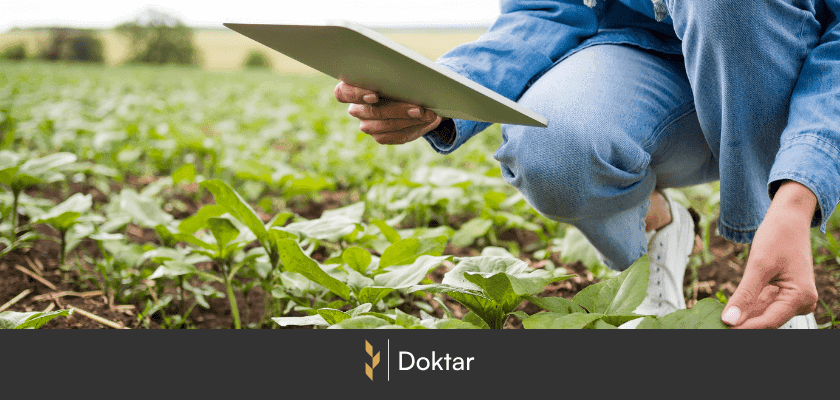
Another key technology is crop health sensors that monitor soil moisture, temperature, and nutrient levels. When combined with automation in agriculture, such as automated irrigation systems, these sensors optimize resource distribution across fields. For instance, Doktar’s FieldStation gathers real-time data, allowing for precise interventions and reducing input costs.
Source: Canva
Benefits of Integrating Crop Monitoring Systems into Farm Operations
Integrating crop health monitoring systems enhances farm operations while improving economic and environmental outcomes. One of the most significant advantages is the reduction in input costs. By delivering precise data on crop needs, these systems minimize the overuse of water, fertilizers, and pesticides, conserving resources and safeguarding the environment.
Another advantage is the capability to implement real-time monitoring solutions. Systems such as Doktar’s CropMap allow farmers to continuously track crop health, enabling prompt responses to emerging issues. This minimizes yield losses due to pests, diseases, or nutrient deficiencies.
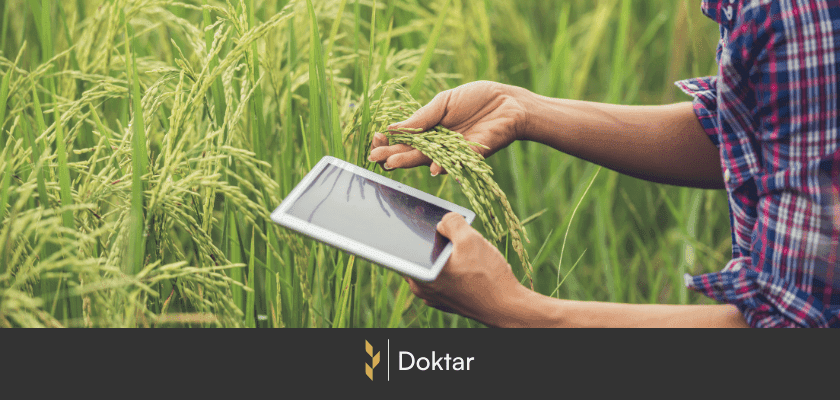
Crop health monitoring systems, including PestTrap, significantly enhance pest and disease control by enabling targeted interventions. PestTrap’s AI-driven technology identifies and counts pests in real-time, allowing farmers to detect infestations early. This means pesticides can be applied only where necessary, reducing chemical usage and promoting sustainable farming practices. By minimizing excessive pesticide application, farms lower production costs and meet consumer demand for eco-friendly agricultural products.
Beyond pest control, these systems play a crucial role in data-driven agriculture. They provide valuable insights into long-term trends, helping farmers optimize crop rotation strategies to maintain soil health and prevent pest build-up. Additionally, real-time monitoring aids in adjusting planting schedules based on weather patterns and climate variability, ensuring better yields and resource efficiency. By integrating these technologies, farms become more resilient and better equipped to navigate future challenges.
Source: Canva
The Future of Farm Management with Integrated Crop Monitoring
The future of agriculture relies on the continuous integration of technologies that enhance productivity and sustainability. As smart monitoring solutions progress, they will become more essential in farm management. Emerging trends like predictive analytics in agriculture will empower farmers to anticipate challenges and implement proactive measures.
Doktar’s comprehensive solutions, including CropMap and Doktar App, exemplify the future of integrated crop monitoring. By combining satellite imagery, IoT sensors, and machine learning, these tools provide a holistic view of farm operations. For example, predictive models can forecast pest outbreaks or nutrient deficiencies, enabling farmers to plan interventions ahead of time. CropMap, on the other hand, offers real-time monitoring of crop health, whereas Doktar App integrates satellite crop monitoring with ground data to deliver actionable insights.
Integrating climate-smart agriculture strategies with crop monitoring systems will further enhance resource efficiency. Climate-smart agriculture is an approach that guides actions towards sustainable development amid a changing climate. Technologies like renewable energy-powered sensors and automated irrigation systems will lessen agriculture’s environmental footprint, promoting long-term sustainability. As global challenges such as food insecurity and climate change intensify, integrated crop health monitoring systems will remain crucial for ensuring efficient and sustainable farm management.
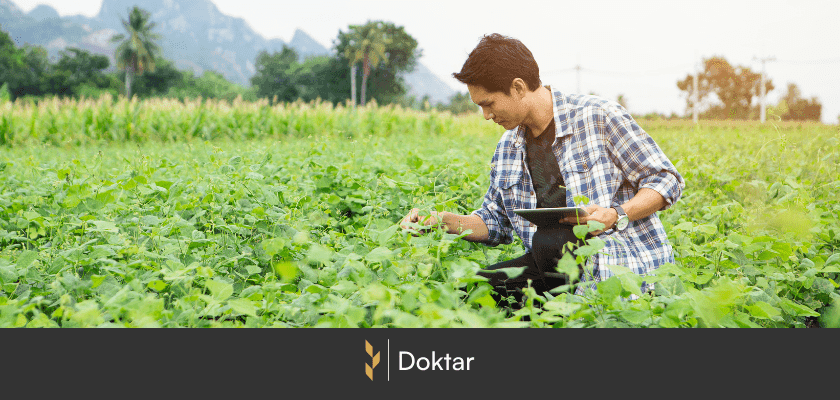
Source: Canva
Frequently Asked Questions
Conclusion
Integrating crop health monitoring systems is no longer a luxury but a necessity for modern agriculture. Tools like Doktar’s CropMap and Doktar App empower farmers with actionable insights, enabling data-driven decisions that enhance productivity, reduce costs, and promote sustainability. As these technologies continue to evolve, they will shape the future of farm management, ensuring that agriculture remains resilient, efficient, and environmentally conscious in the face of global challenges.
As the demand for higher yields and sustainable practices grows, integrating advanced crop health monitoring systems has become vital in modern agriculture. These systems utilize innovative technologies to deliver real-time insights into plant health, enabling farmers to make data-driven decisions, enhance resource efficiency, and boost overall productivity. By using solutions like Doktar’s CropMap and Doktar App, agribusinesses can achieve improved farm management and promote long-term sustainability.
The Importance of Crop Health Monitoring in Modern Agriculture
Crop health monitoring is a cornerstone of smart agriculture technologies, ensuring resilience and profitability amid climate crises. It is vital to promote sustainable farming practices by offering insights into the health of plants at every growth stage. Identifying crop stress or disease often occurs too late in traditional farming, resulting in significant yield losses and increased input costs. Conversely, modern crop health monitoring systems powered by advanced technologies allow for early detection of issues through real-time monitoring and predictive analytics, providing farmers with a dependable tool for disease prevention.
Such systems assess indicators of plant health, such as leaf color, growth rates, and nutrient levels. By detecting early signs of stress from pests, diseases, or environmental factors, farmers can quickly reduce potential losses. Furthermore, these systems improve resource efficiency by providing accurate data on water, fertilizer, and pesticide needs, thereby minimizing waste and environmental impact. Integrating data analytics into agriculture also supports long-term planning. Farmers can identify trends, optimize planting schedules, and adapt to changing conditions by analyzing historical and current data.
Technologies Driving Crop Health Monitoring Systems
Technological advancements have transformed how farmers monitor crop health. Remote sensing in agriculture employs satellite imagery and drones to gather high-resolution data on crop conditions. These tools offer a comprehensive view of extensive fields, pinpoint stress zones, and facilitate targeted interventions.
Doktar’s Doktar App combines satellite crop monitoring with on-ground data to deliver actionable insights. By integrating NDVI (Normalized Difference Vegetation Index) imaging with soil health information, Doktar App enables farmers to pinpoint areas requiring immediate attention. This reduces reliance on manual inspections and encourages timely decision-making.
Another key technology is crop health sensors that monitor soil moisture, temperature, and nutrient levels. When combined with automation in agriculture, such as automated irrigation systems, these sensors optimize resource distribution across fields. For instance, Doktar’s FieldStation gathers real-time data, allowing for precise interventions and reducing input costs.
Source: Canva
Benefits of Integrating Crop Monitoring Systems into Farm Operations
Integrating crop health monitoring systems enhances farm operations while improving economic and environmental outcomes. One of the most significant advantages is the reduction in input costs. By delivering precise data on crop needs, these systems minimize the overuse of water, fertilizers, and pesticides, conserving resources and safeguarding the environment.
Another advantage is the capability to implement real-time monitoring solutions. Systems such as Doktar’s CropMap allow farmers to continuously track crop health, enabling prompt responses to emerging issues. This minimizes yield losses due to pests, diseases, or nutrient deficiencies.
Crop health monitoring systems, including PestTrap, significantly enhance pest and disease control by enabling targeted interventions. PestTrap’s AI-driven technology identifies and counts pests in real-time, allowing farmers to detect infestations early. This means pesticides can be applied only where necessary, reducing chemical usage and promoting sustainable farming practices. By minimizing excessive pesticide application, farms lower production costs and meet consumer demand for eco-friendly agricultural products.
Beyond pest control, these systems play a crucial role in data-driven agriculture. They provide valuable insights into long-term trends, helping farmers optimize crop rotation strategies to maintain soil health and prevent pest build-up. Additionally, real-time monitoring aids in adjusting planting schedules based on weather patterns and climate variability, ensuring better yields and resource efficiency. By integrating these technologies, farms become more resilient and better equipped to navigate future challenges.
Source: Canva
The Future of Farm Management with Integrated Crop Monitoring
The future of agriculture relies on the continuous integration of technologies that enhance productivity and sustainability. As smart monitoring solutions progress, they will become more essential in farm management. Emerging trends like predictive analytics in agriculture will empower farmers to anticipate challenges and implement proactive measures.
Doktar’s comprehensive solutions, including CropMap and Doktar App, exemplify the future of integrated crop monitoring. By combining satellite imagery, IoT sensors, and machine learning, these tools provide a holistic view of farm operations. For example, predictive models can forecast pest outbreaks or nutrient deficiencies, enabling farmers to plan interventions ahead of time. CropMap, on the other hand, offers real-time monitoring of crop health, whereas Doktar App integrates satellite crop monitoring with ground data to deliver actionable insights.
Integrating climate-smart agriculture strategies with crop monitoring systems will further enhance resource efficiency. Climate-smart agriculture is an approach that guides actions towards sustainable development amid a changing climate. Technologies like renewable energy-powered sensors and automated irrigation systems will lessen agriculture’s environmental footprint, promoting long-term sustainability. As global challenges such as food insecurity and climate change intensify, integrated crop health monitoring systems will remain crucial for ensuring efficient and sustainable farm management.
Source: Canva
Frequently Asked Questions
Conclusion
Integrating crop health monitoring systems is no longer a luxury but a necessity for modern agriculture. Tools like Doktar’s CropMap and Doktar App empower farmers with actionable insights, enabling data-driven decisions that enhance productivity, reduce costs, and promote sustainability. As these technologies continue to evolve, they will shape the future of farm management, ensuring that agriculture remains resilient, efficient, and environmentally conscious in the face of global challenges.