Risk Assessment and Agricultural Intelligence for Financial Institutions
Risk Assessment and Agricultural Intelligence for Financial Institutions
Doktar bridges the data gap between financial institutions and the agricultural assets they finance.
Our field intelligence infrastructure delivers verified, continuous data on crop performance, soil health, weather exposure, and farming practices, enabling institutions to move from estimation-based risk models to precision underwriting, parametric insurance, and sustainability- verified lending.
Automate Claim Resolutions
Quantify Agricultural Risks
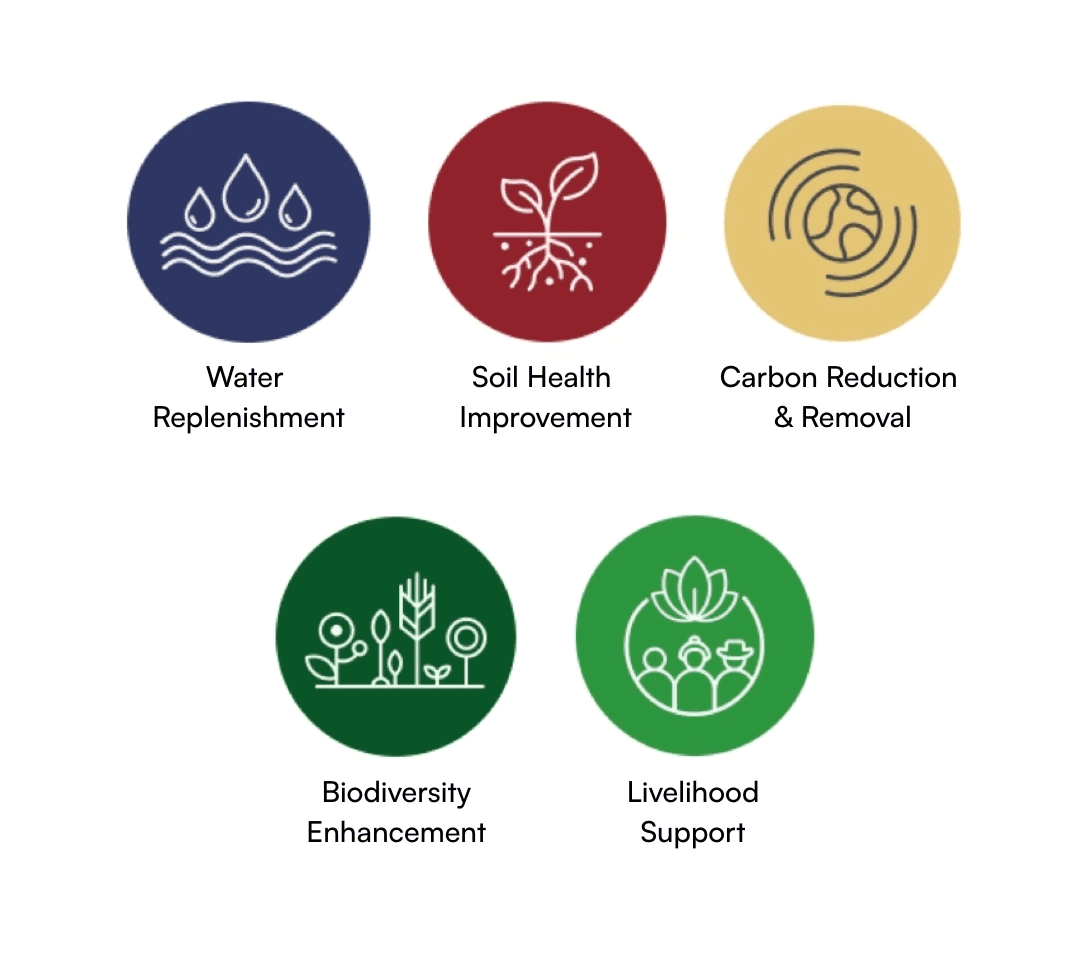
Verify Sustainability Outcomes
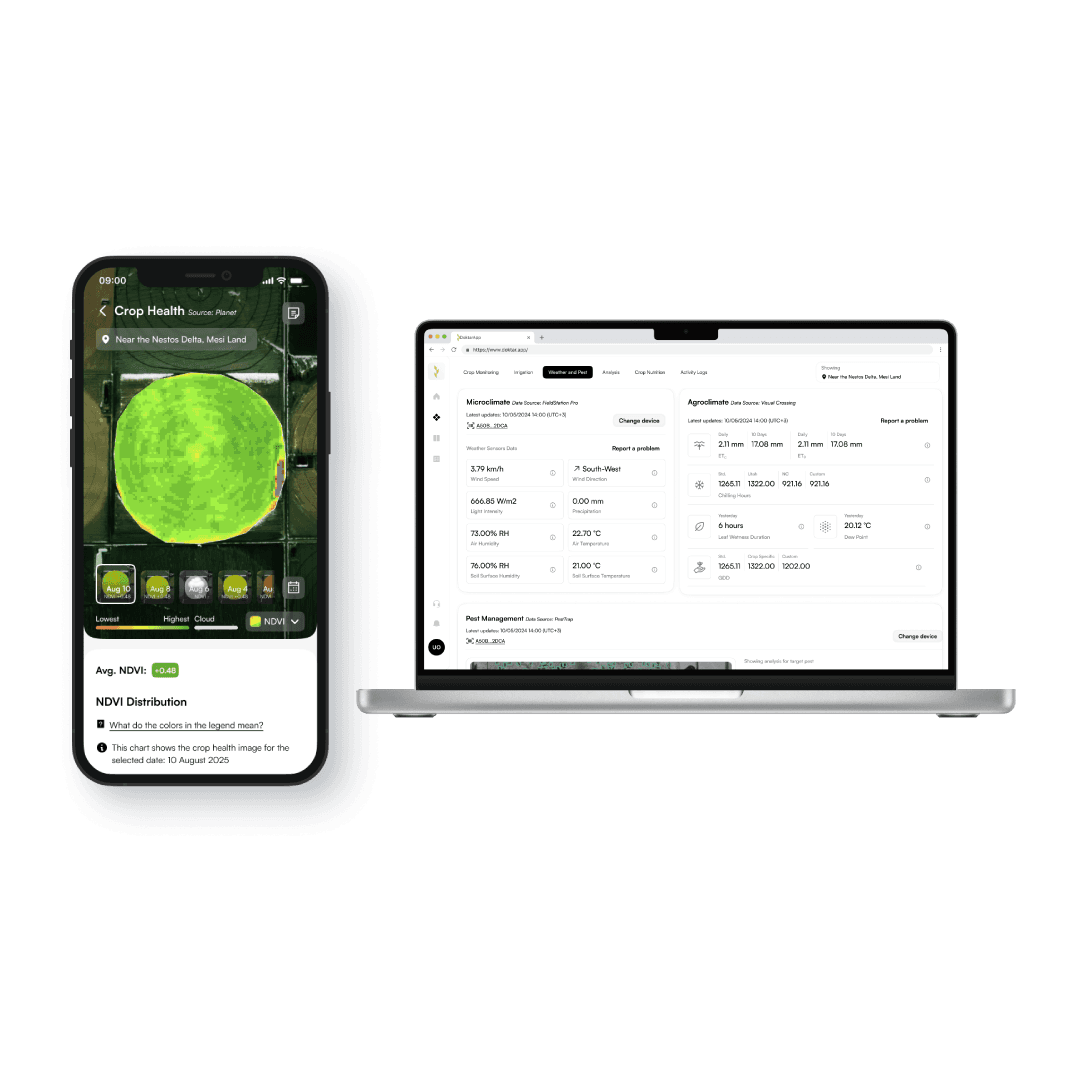
Assess Lending Risk Through Verified Field Data
Agricultural credit decisions built on self-reported data carry structural risk. Satellite-based crop health monitoring, continuous environmental measurements, and digital activity records provide an objective, field-verified foundation for credit evaluation that operates independently of borrower reporting.
Satellite-verified crop health data without site visits
Continuous soil moisture, precipitation, and microclimate records in real time
Timestamped activity logs replacing unverifiable self-reporting
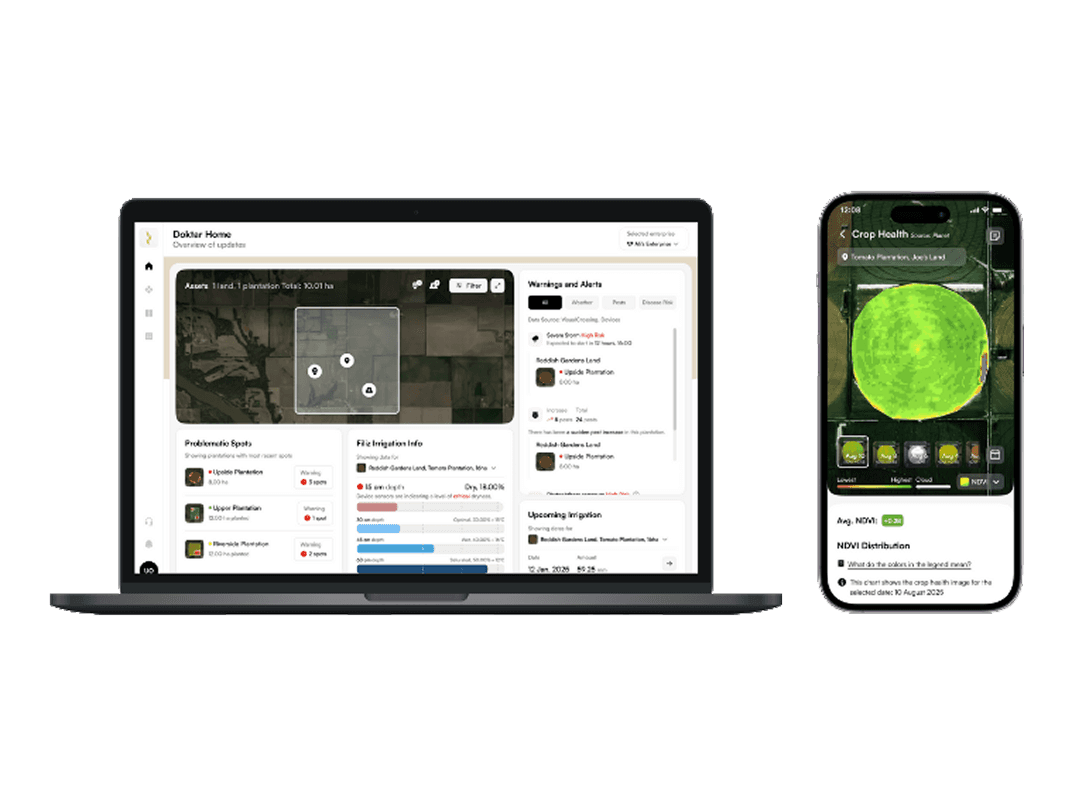
Assess Lending Risk Through Verified Field Data
Agricultural credit decisions built on self-reported data carry structural risk. Satellite-based crop health monitoring, continuous environmental measurements, and digital activity records provide an objective, field-verified foundation for credit evaluation that operates independently of borrower reporting.
Satellite-verified crop health data without site visits
Continuous soil moisture, precipitation, and microclimate records in real time
Timestamped activity logs replacing unverifiable self-reporting
Assess Lending Risk Through Verified Field Data
Agricultural credit decisions built on self-reported data carry structural risk. Satellite-based crop health monitoring, continuous environmental measurements, and digital activity records provide an objective, field-verified foundation for credit evaluation that operates independently of borrower reporting.
Satellite-verified crop health data without site visits
Continuous soil moisture, precipitation, and microclimate records in real time
Timestamped activity logs replacing unverifiable self-reporting
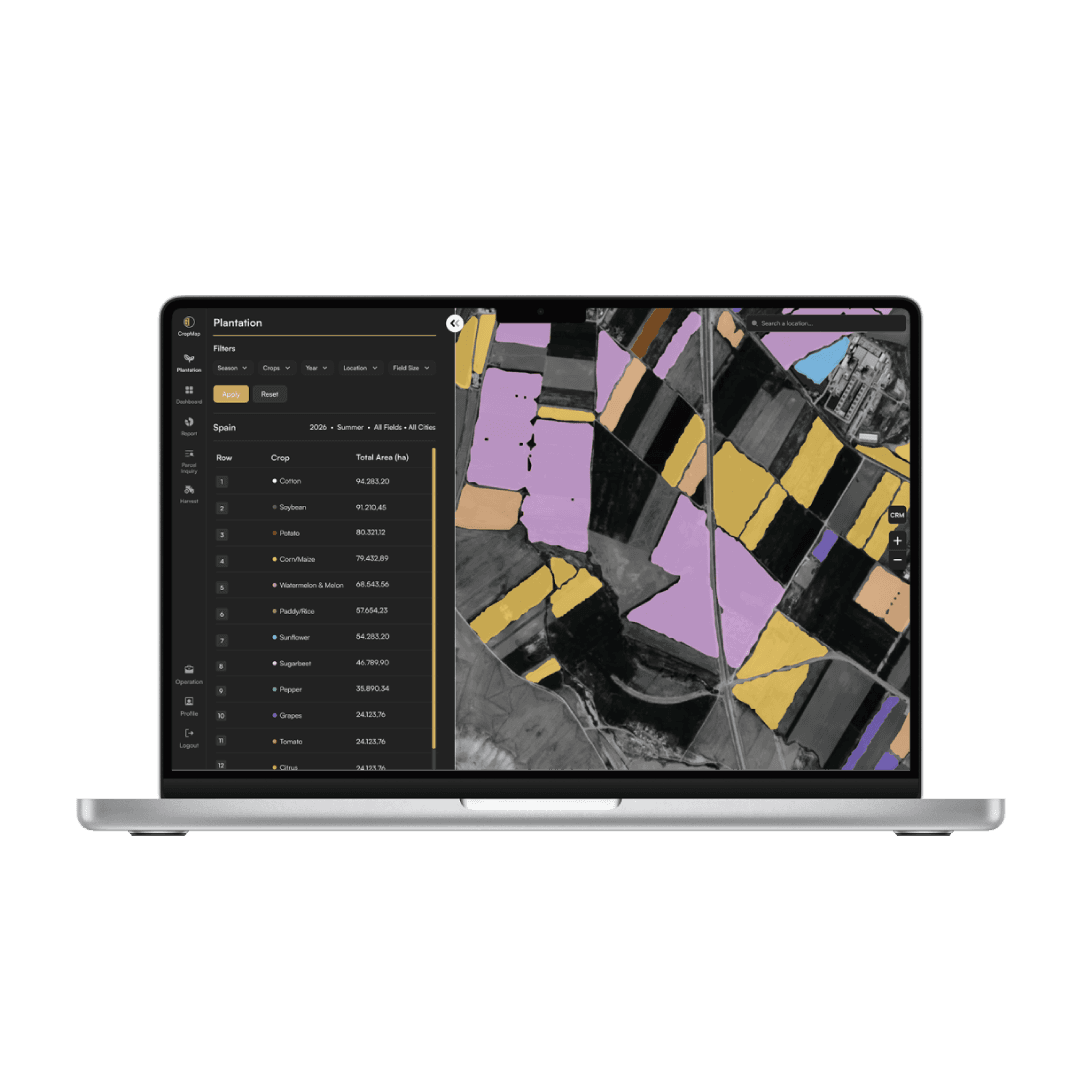
Monitor Portfolio Health & Crop Performance Remotely
Large agricultural loan portfolios require scalable oversight that does not depend on physical inspections. Parcel-level crop identification combined with field-level health tracking enables your risk and strategy teams to map credit exposure by crop type, identify concentration risk, and align lending strategies with verified agricultural activity.
Field-level NDVI surfacing underperformance early
Regional planting data grounding exposure analysis in verified activity
Seasonal tracking building trend-based assessments without field teams
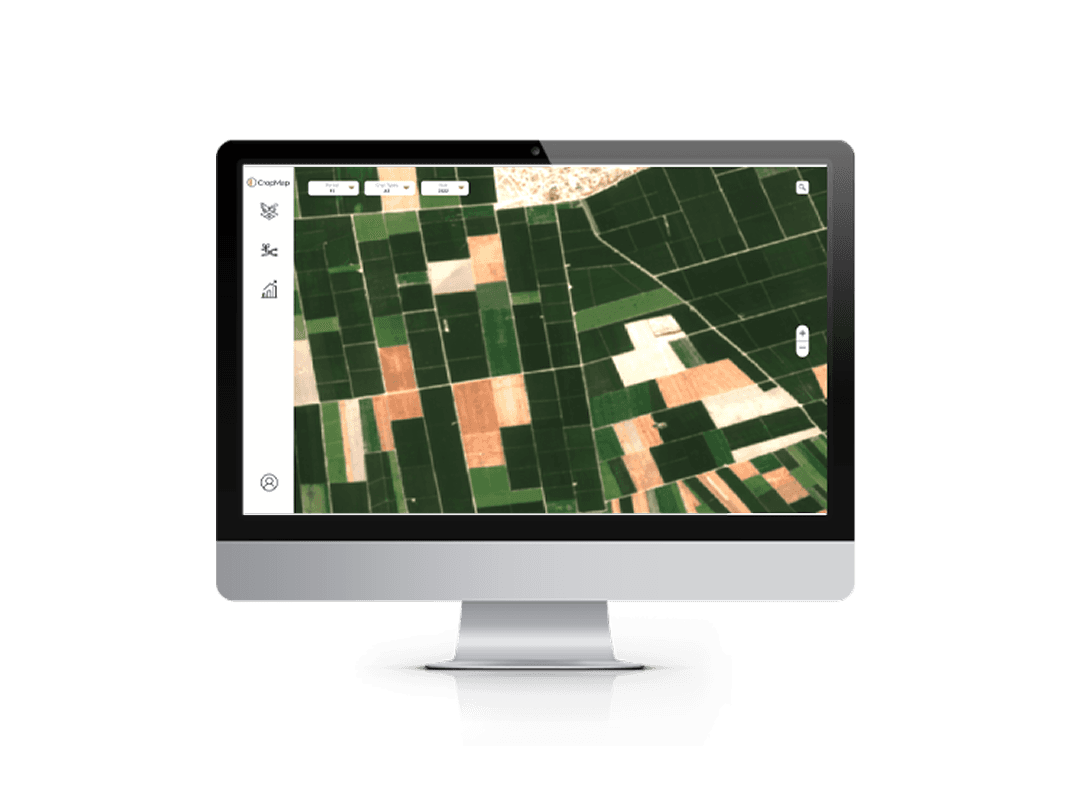
Monitor Portfolio Health & Crop Performance Remotely
Large agricultural loan portfolios require scalable oversight that does not depend on physical inspections. Parcel-level crop identification combined with field-level health tracking enables your risk and strategy teams to map credit exposure by crop type, identify concentration risk, and align lending strategies with verified agricultural activity.
Field-level NDVI surfacing underperformance early
Regional planting data grounding exposure analysis in verified activity
Seasonal tracking building trend-based assessments without field teams
Monitor Portfolio Health & Crop Performance Remotely
Large agricultural loan portfolios require scalable oversight that does not depend on physical inspections. Parcel-level crop identification combined with field-level health tracking enables your risk and strategy teams to map credit exposure by crop type, identify concentration risk, and align lending strategies with verified agricultural activity.
Field-level NDVI surfacing underperformance early
Regional planting data grounding exposure analysis in verified activity
Seasonal tracking building trend-based assessments without field teams
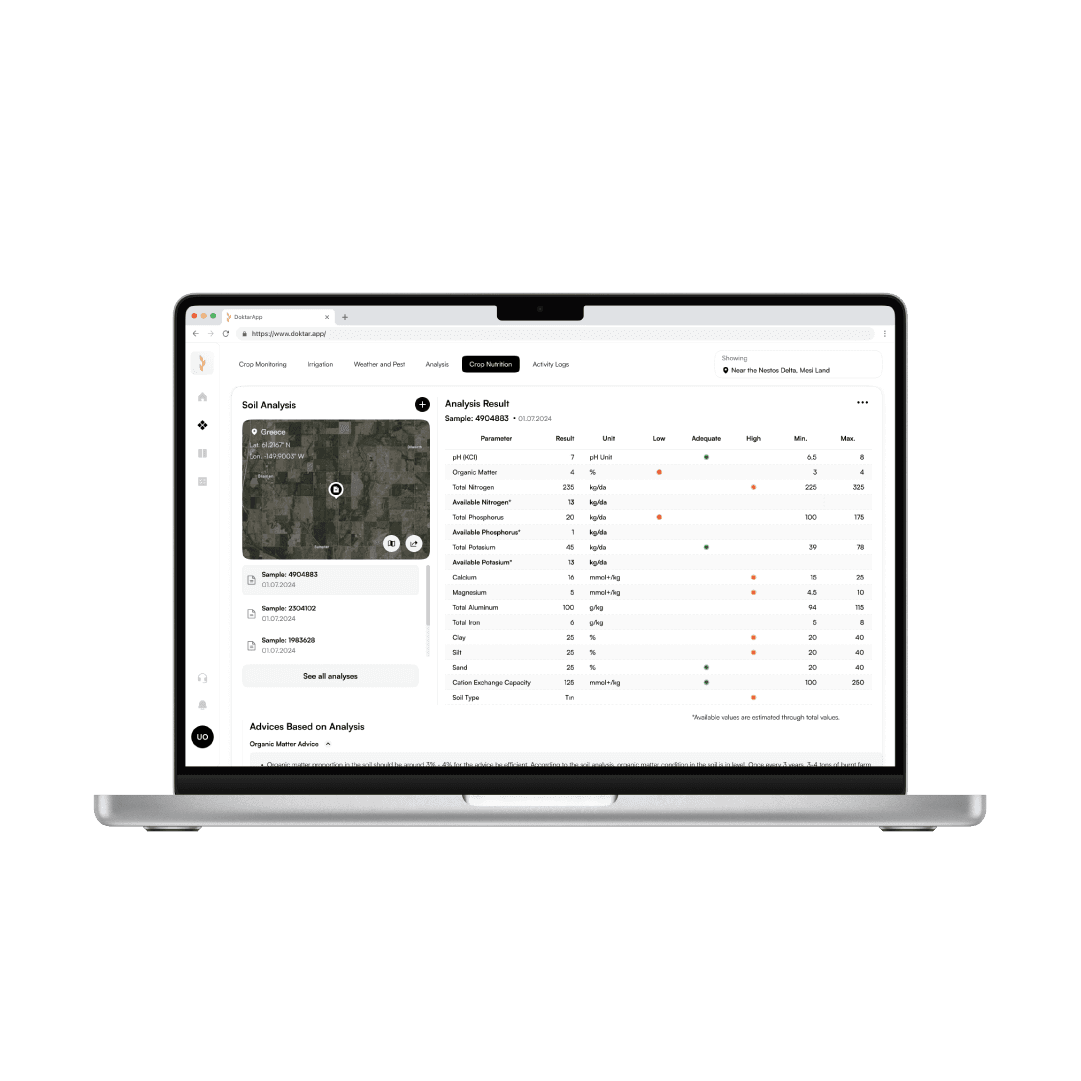
Verify Farmer Activity & Input Compliance
Loan conditions tied to specific agronomic practices require verifiable proof of compliance. Digital records of planting, irrigation, fertilization, and pest management replace informal reporting with structured, timestamped documentation that borrower compliance becomes continuous and auditable.
Complete operational records per borrower from planting through harvest
Input data verifying alignment with loan conditions
Exportable reports reducing verification costs
Verify Farmer Activity & Input Compliance
Loan conditions tied to specific agronomic practices require verifiable proof of compliance. Digital records of planting, irrigation, fertilization, and pest management replace informal reporting with structured, timestamped documentation that borrower compliance becomes continuous and auditable.
Complete operational records per borrower from planting through harvest
Input data verifying alignment with loan conditions
Exportable reports reducing verification costs
Verify Farmer Activity & Input Compliance
Loan conditions tied to specific agronomic practices require verifiable proof of compliance. Digital records of planting, irrigation, fertilization, and pest management replace informal reporting with structured, timestamped documentation that borrower compliance becomes continuous and auditable.
Complete operational records per borrower from planting through harvest
Input data verifying alignment with loan conditions
Exportable reports reducing verification costs
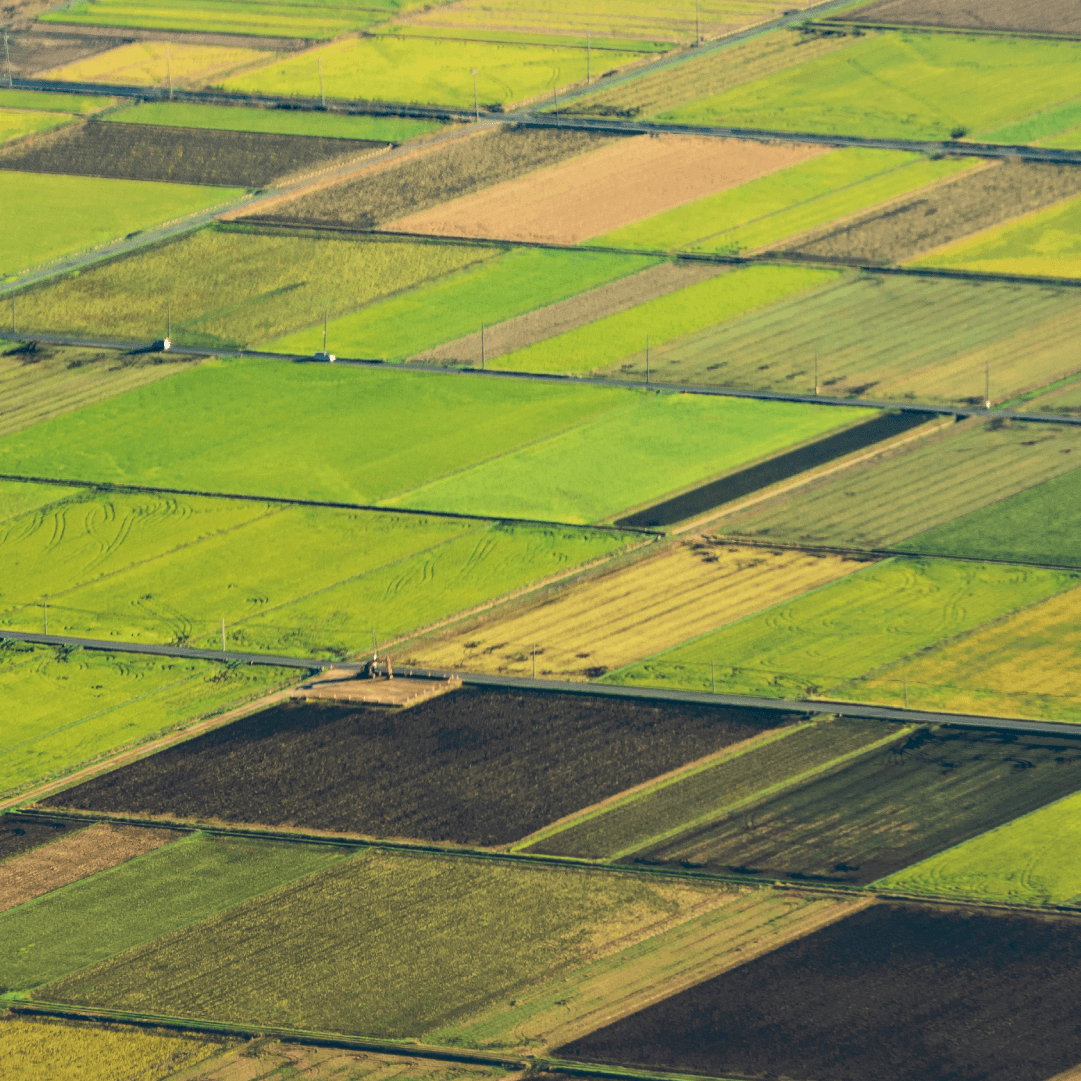
Quantify Environmental Impact for Green Finance Instruments
Sustainability-linked credit, green bonds, and impact investment frameworks require measurable environmental performance data across financed operations. Field-level tracking of farming practices quantifies environmental KPIs including carbon footprint, soil organic matter, water usage, and biodiversity indicators, making borrower compliance verifiable, continuous, and audit-ready.
Carbon accounting across financed operations
Water stewardship metrics at field and program level
Soil health indicators strengthening collateral assessments
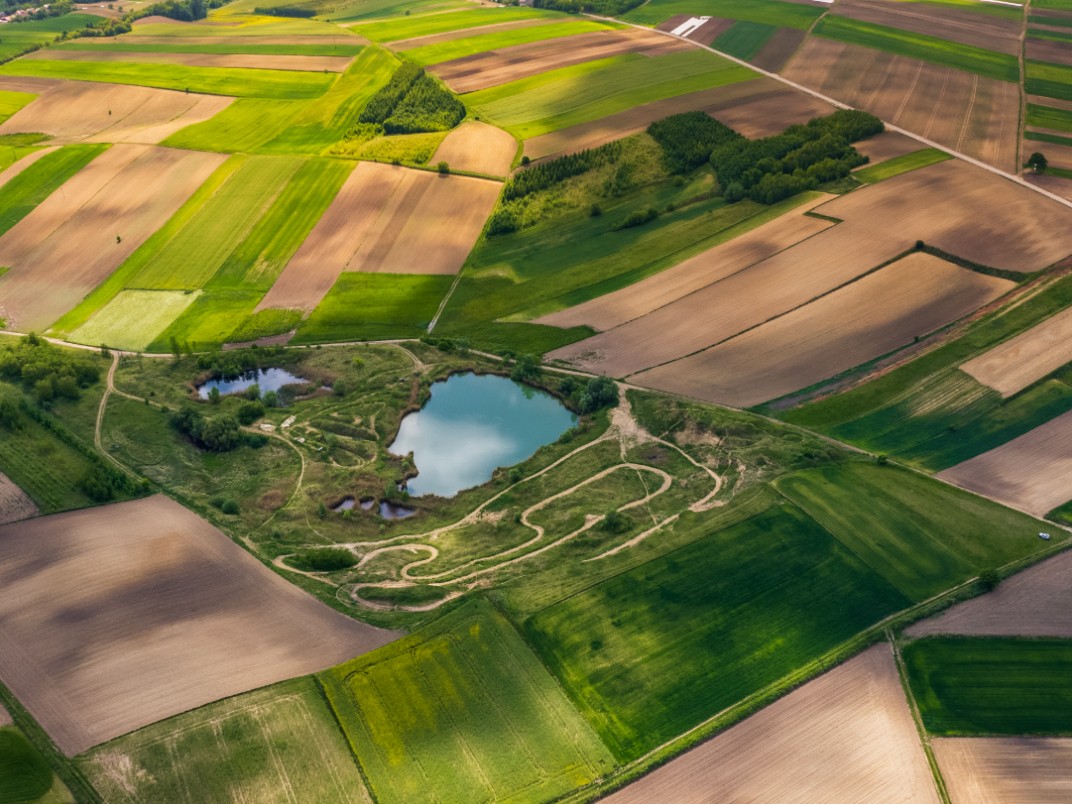
Quantify Environmental Impact for Green Finance Instruments
Sustainability-linked credit, green bonds, and impact investment frameworks require measurable environmental performance data across financed operations. Field-level tracking of farming practices quantifies environmental KPIs including carbon footprint, soil organic matter, water usage, and biodiversity indicators, making borrower compliance verifiable, continuous, and audit-ready.
Carbon accounting across financed operations
Water stewardship metrics at field and program level
Soil health indicators strengthening collateral assessments
Quantify Environmental Impact for Green Finance Instruments
Sustainability-linked credit, green bonds, and impact investment frameworks require measurable environmental performance data across financed operations. Field-level tracking of farming practices quantifies environmental KPIs including carbon footprint, soil organic matter, water usage, and biodiversity indicators, making borrower compliance verifiable, continuous, and audit-ready.
Carbon accounting across financed operations
Water stewardship metrics at field and program level
Soil health indicators strengthening collateral assessments
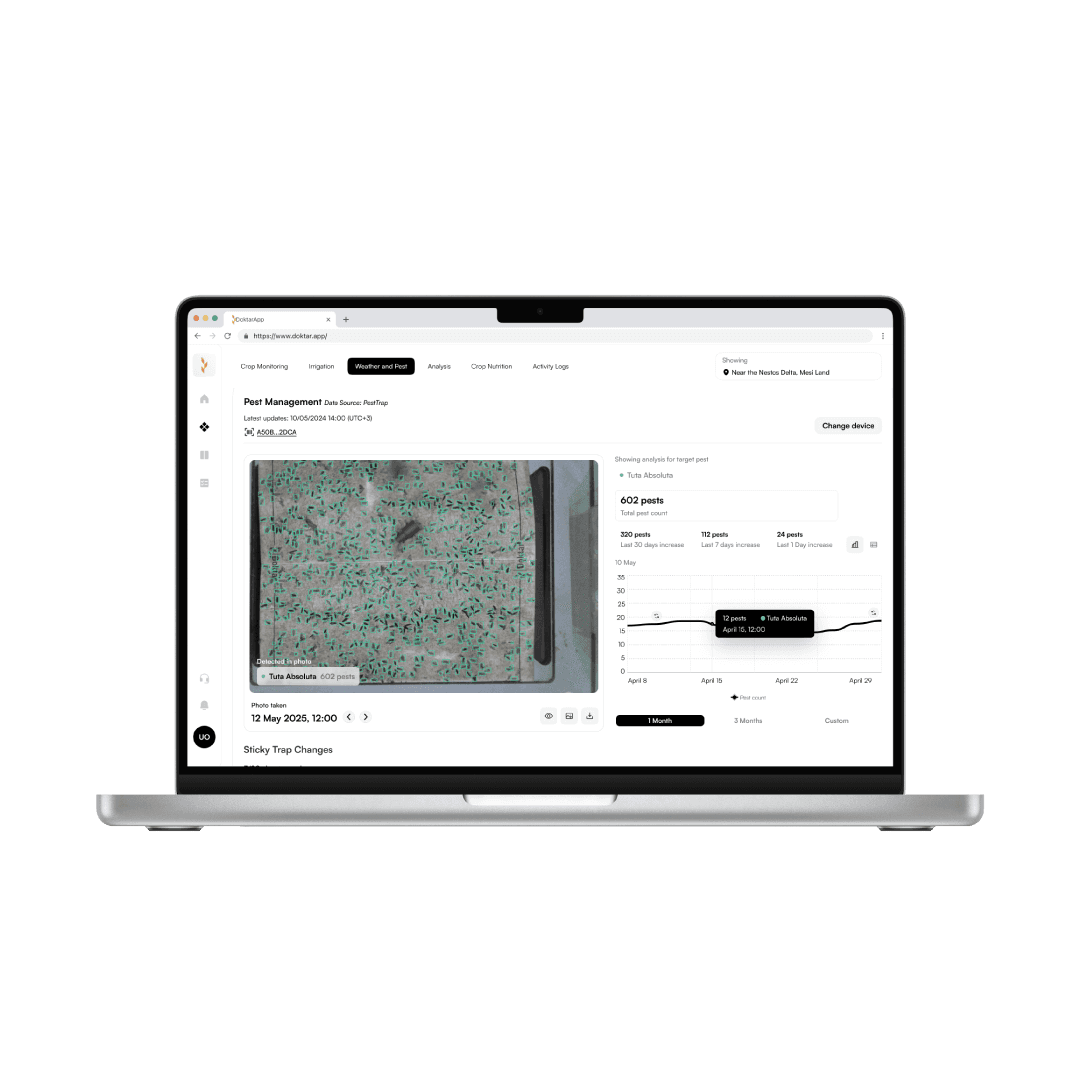
Reduce Information Asymmetry Between Lender and Borrower
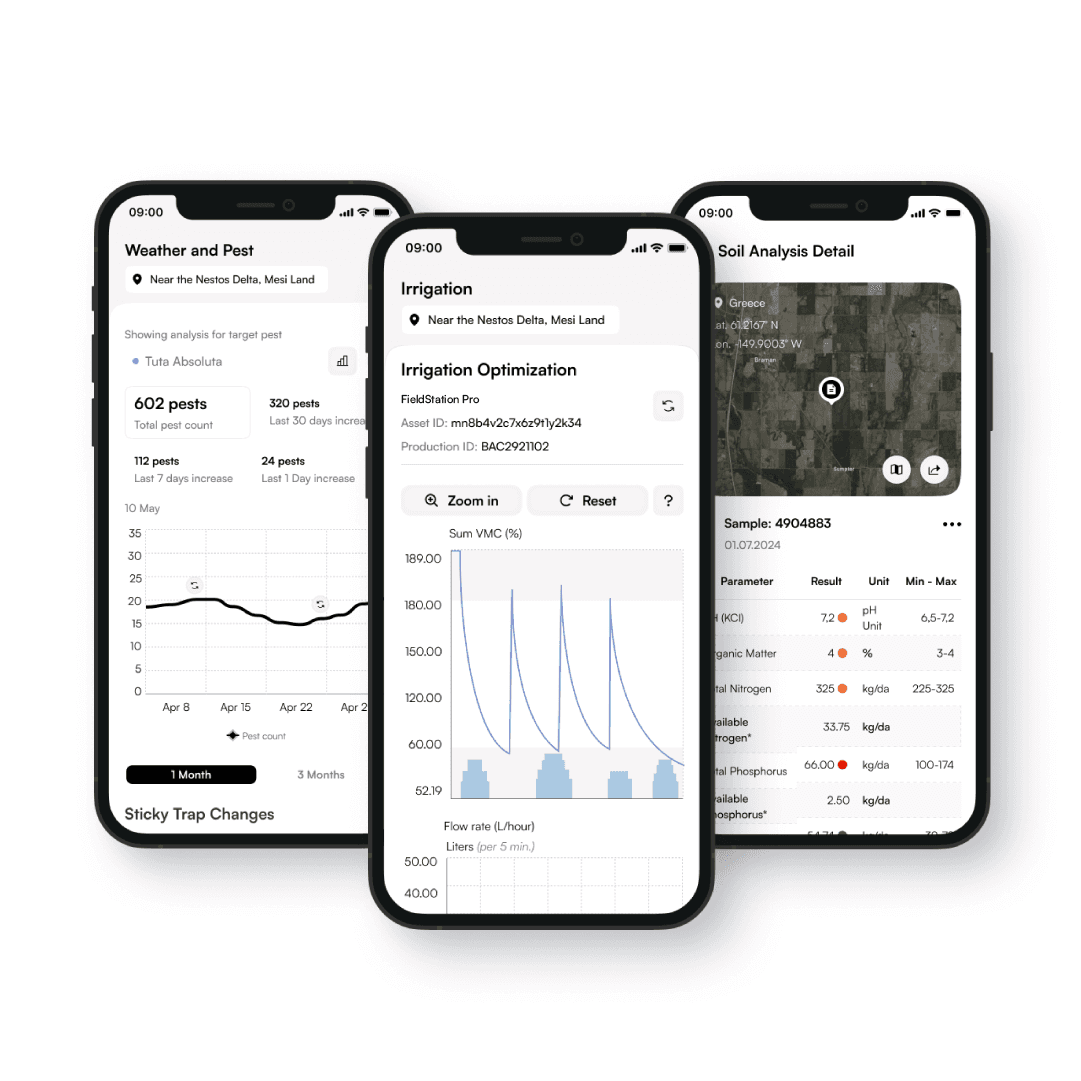
Traditional agricultural lending relies on borrower-reported data, creating a structural information gap that increases risk for both parties. Real-time sensor, pest, and crop health data accessible through a shared digital platform replaces estimates with continuous, independently measured field intelligence.
Independent field condition data verifying borrower reporting
Pest and crop health trends accessible without borrower disclosure
Shared platform transparency reducing dispute risk
Reduce Information Asymmetry Between Lender and Borrower
Traditional agricultural lending relies on borrower-reported data, creating a structural information gap that increases risk for both parties. Real-time sensor, pest, and crop health data accessible through a shared digital platform replaces estimates with continuous, independently measured field intelligence.
Independent field condition data verifying borrower reporting
Pest and crop health trends accessible without borrower disclosure
Shared platform transparency reducing dispute risk
Reduce Information Asymmetry Between Lender and Borrower
Traditional agricultural lending relies on borrower-reported data, creating a structural information gap that increases risk for both parties. Real-time sensor, pest, and crop health data accessible through a shared digital platform replaces estimates with continuous, independently measured field intelligence.
Independent field condition data verifying borrower reporting
Pest and crop health trends accessible without borrower disclosure
Shared platform transparency reducing dispute risk
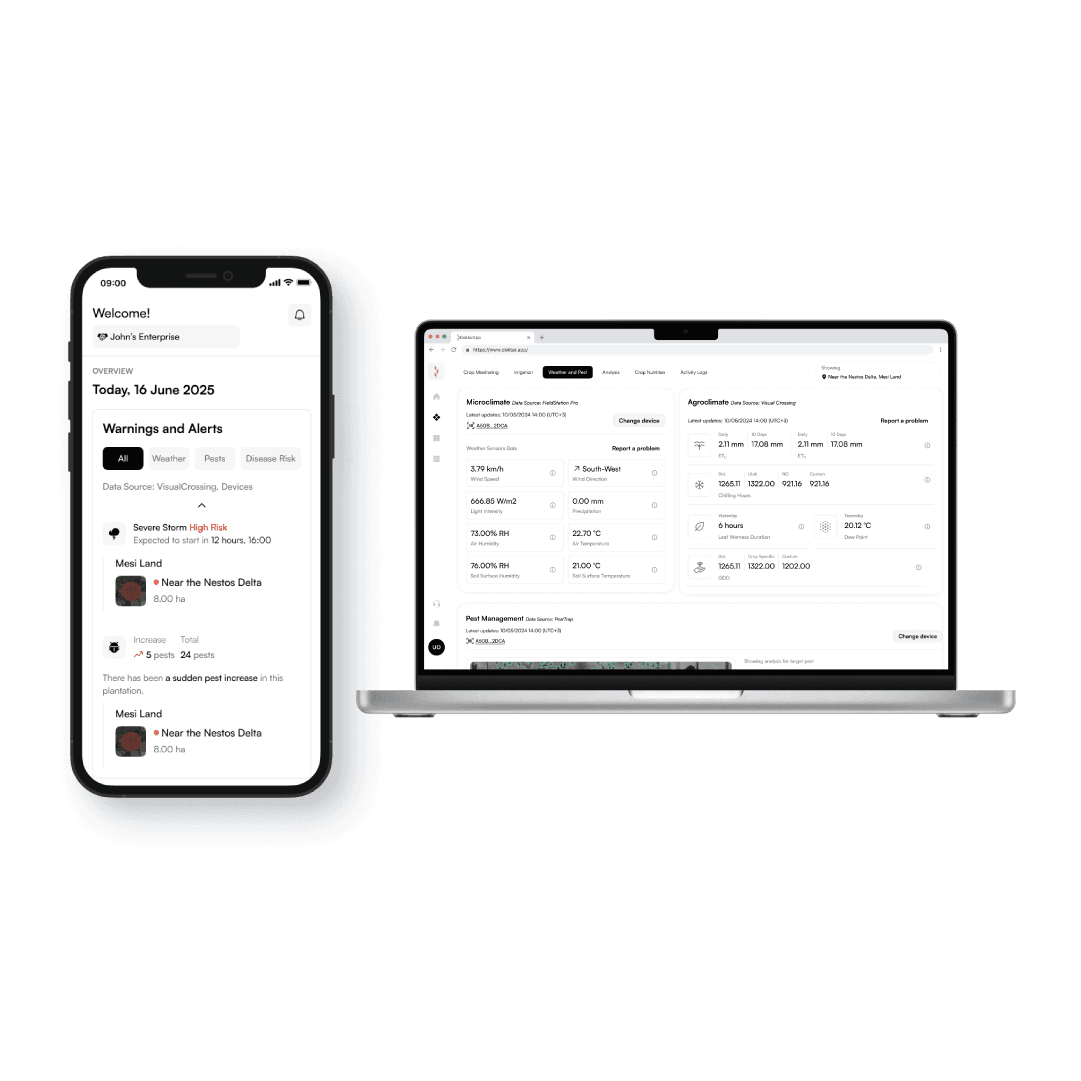
Support Parametric Insurance & Automated Risk Triggers
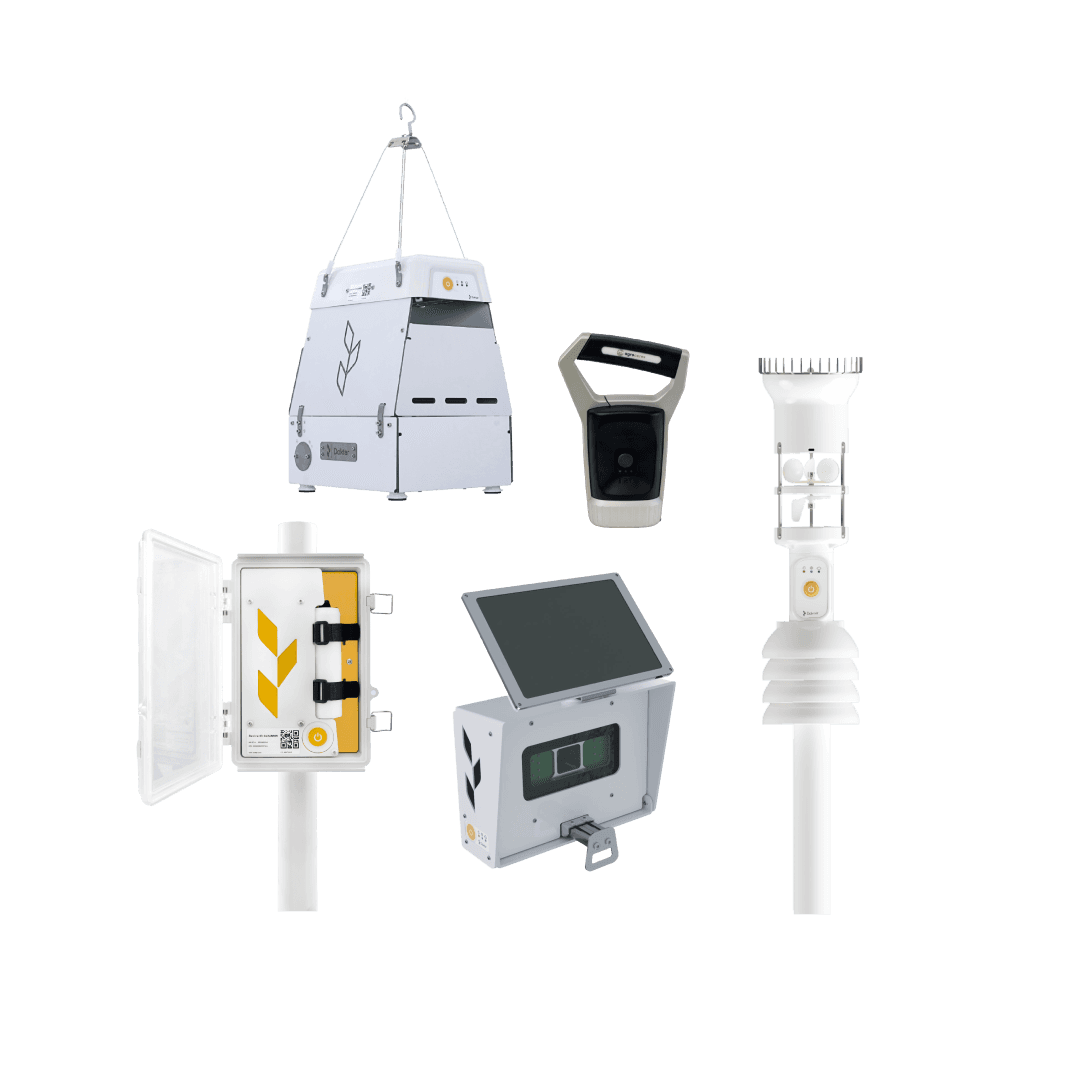
Doktar’s sensor infrastructure and data APIs enable models where payouts are triggered by measured environmental conditions rather than physical damage verification. When predefined thresholds are breached (excessive rainfall, prolonged drought, frost events), the data triggers automated workflows, eliminating the inspection bottleneck.
Continuous, timestamped microclimate data at field level
Threshold breaches triggering automated payout workflows via API
Parcel-level damage detection providing independent claims evidence
Historical records supporting actuarial analysis and product calibration
Support Parametric Insurance & Automated Risk Triggers
Doktar’s sensor infrastructure and data APIs enable models where payouts are triggered by measured environmental conditions rather than physical damage verification. When predefined thresholds are breached (excessive rainfall, prolonged drought, frost events), the data triggers automated workflows, eliminating the inspection bottleneck.
Continuous, timestamped microclimate data at field level
Threshold breaches triggering automated payout workflows via API
Parcel-level damage detection providing independent claims evidence
Historical records supporting actuarial analysis and product calibration
Support Parametric Insurance & Automated Risk Triggers
Doktar’s sensor infrastructure and data APIs enable models where payouts are triggered by measured environmental conditions rather than physical damage verification. When predefined thresholds are breached (excessive rainfall, prolonged drought, frost events), the data triggers automated workflows, eliminating the inspection bottleneck.
Continuous, timestamped microclimate data at field level
Threshold breaches triggering automated payout workflows via API
Parcel-level damage detection providing independent claims evidence
Historical records supporting actuarial analysis and product calibration